I’m Pregnant
If you're facing an unintended pregnancy or have recently given birth, we're here for you with free and confidential all-options counseling, resources, and support. Call or text our pregnancy counselors at 800-439-0233.


If you're facing an unintended pregnancy or have recently given birth, we're here for you with free and confidential all-options counseling, resources, and support. Call or text our pregnancy counselors at 800-439-0233.
Browse our network of adoption services including infant and foster care adoption, home studies, and post-adoption support.

Explore our network of services including specialized counseling and support groups that help to stabilize and improve behavioral health symptoms.

Looking for Adoptions Together or FamilyWorks Together? New name, same us. Here’s why!
Written by Director of Adoption and Permanency Services, Pam Hoehler
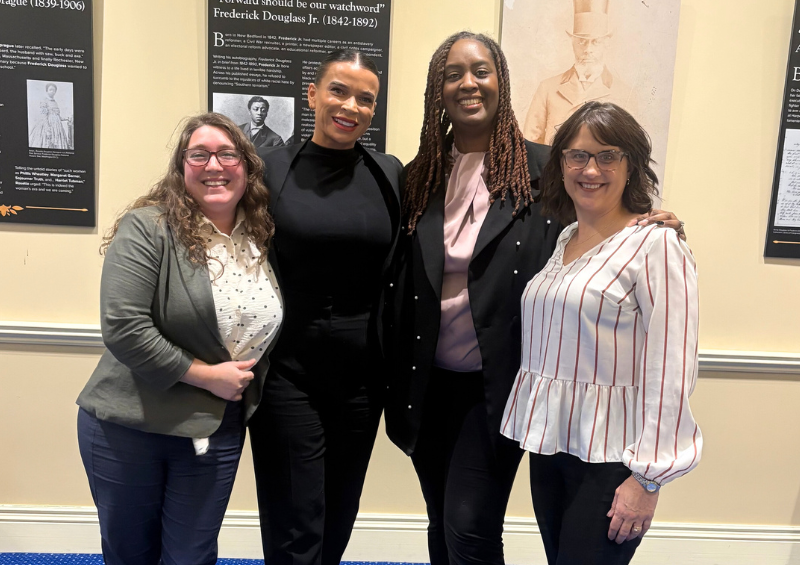
In February, I had the privilege of representing Paths for Families at the Maryland Association of Resources for Families and Youth (MARFY) 2026 Evening of Advocacy at the Maryland House of Delegates in Annapolis. Alongside other private child-placing agencies, I met with lawmakers to advocate for policy changes that would strengthen protections for children, expectant parents, and adoptive families across our state. Later that month, I furthered our advocacy by testifying in Annapolis in support of House Bill 1258 — Child Placement Services – Advertising by Unlicensed Person – Prohibition.
House Bill 1258 is sponsored by Delegate Stephanie Smith and would prohibit the advertising of adoption services by unlicensed, unregulated entities in Maryland. The intent of the bill is clear: to prevent unethical adoption facilitators, often referred to as “baby brokers,” from marketing services in Maryland without oversight or accountability.
Maryland would not be alone in taking this step. Twenty‑two other states already have similar laws in place, recognizing that adoption is not a transaction, but a child‑centered process that requires transparency, regulation, and care.
This proposed Maryland legislation is part of a broader national effort to address the harmful practices of unregulated adoption advertising. Across the country, advocates are supporting the ADOPT Act, which seeks to prohibit the advertising of adoption services by entities that are not licensed or regulated. This effort is gaining momentum nationally, as more states and organizations recognize the risks posed by unregulated facilitators.
For years, unregulated facilitators have preyed on expectant parents during moments of vulnerability. In Maryland, DC, and Virginia, there are laws in place that protect birth parents by ensuring adequate time to make informed decisions about adoption and, if needed, change their minds. These laws also preserve appropriate involvement for fathers in the adoption process.
Brokers often attempt to circumvent these protections. They may pressure pregnant women to travel to states with shorter or nonexistent revocation periods, or states that limit a father’s legal rights. Promises of housing, financial support, or stability are sometimes used to coerce women into adoption plans that are not truly voluntary or informed.
Prospective adoptive parents are also harmed by these practices. Unregulated facilitators often charge exorbitant fees for matching alone, without providing or coordinating the essential services that ethical adoption requires, including counseling for expectant parents and qualified legal representation for all parties. Families are frequently left without guidance, protections, or recourse when problems arise.
The proposed Maryland legislation would prohibit unlicensed and unregulated adoption entities from advertising in the state. This is a critical step toward ensuring that expectant parents and adoptive families can more easily find ethical, licensed adoption professionals who are accountable to state laws and standards of care.
Virginia already has a similar advertising restriction in place, though advocates, including Paths for Families and partner agencies, continue to work toward stronger enforcement. With advertising restrictions, families are less likely to be drawn into harmful arrangements and more likely to connect with nonprofit, licensed adoption agencies that prioritize comprehensive support and ethical practice.
Licensed, nonprofit adoption agencies:
These agencies, however, cannot compete with the massive advertising budgets of unregulated facilitators, making policy intervention essential.
Advocating for ethical adoption policy is about protecting everyone involved in the adoption process. Laws like the one proposed in Maryland, and national efforts like the ADOPT Act, help ensure that adoption remains centered on informed choice, transparency, and lifelong well‑being rather than profit.
As Paths for Families continues this work at both the state and national levels, we remain committed to policies that strengthen protections, elevate ethical practice, and support families with the care and respect they deserve.
Take action! You can learn more about advocacy efforts related to ethical adoption practices and the ADOPT Act here.
